
What makes touch safe is not the absence of closeness
It is complete clarity about what the closeness is for.
Not theoretically safe. Not safe because someone says so. Safe in the body. Safe in the room. Safe in the pace. Safe in the hands.
A body knows the difference. There is a way it recognises when it is not being taken from. A small change in the breath. A weight that does not return straight to the shoulders. That recognition is what this space exists to establish, before anything else begins.

How consent works here
Consent is not a form signed at the door. It is a continuous practice of listening that lasts the whole session.
Before any touch, there is a conversation. You can name what you would like the work to stay away from. You do not need the words for it. During the session you can pause, slow things down, ask for more stillness, ask the work to move somewhere else, or stop entirely. You can withdraw from contact in any area, at any moment, without explanation.
You do not have to justify a boundary here. You do not have to manage anyone's feelings about it. Your no is received as information, not as resistance.
A space held by a man
For many women this is the real question, so it is answered plainly: the work is held by a man, and the entire practice is built so that this is safe.
What surprises most women is not the softness. It is finding softness without the loss of strength and groundedness in the room. The body registers that before the mind has named it. For a woman whose body learned to brace in the presence of masculine attention, a steady, boundaried presence that asks for nothing can become a clean new reference point. The depth of this work comes from presence, not ambiguity.
Sacred Touch is not a replacement for psychotherapy or medical care. For the full picture, read the vow this practice is held by and consent that stays alive from beginning to end.
What happens in a session
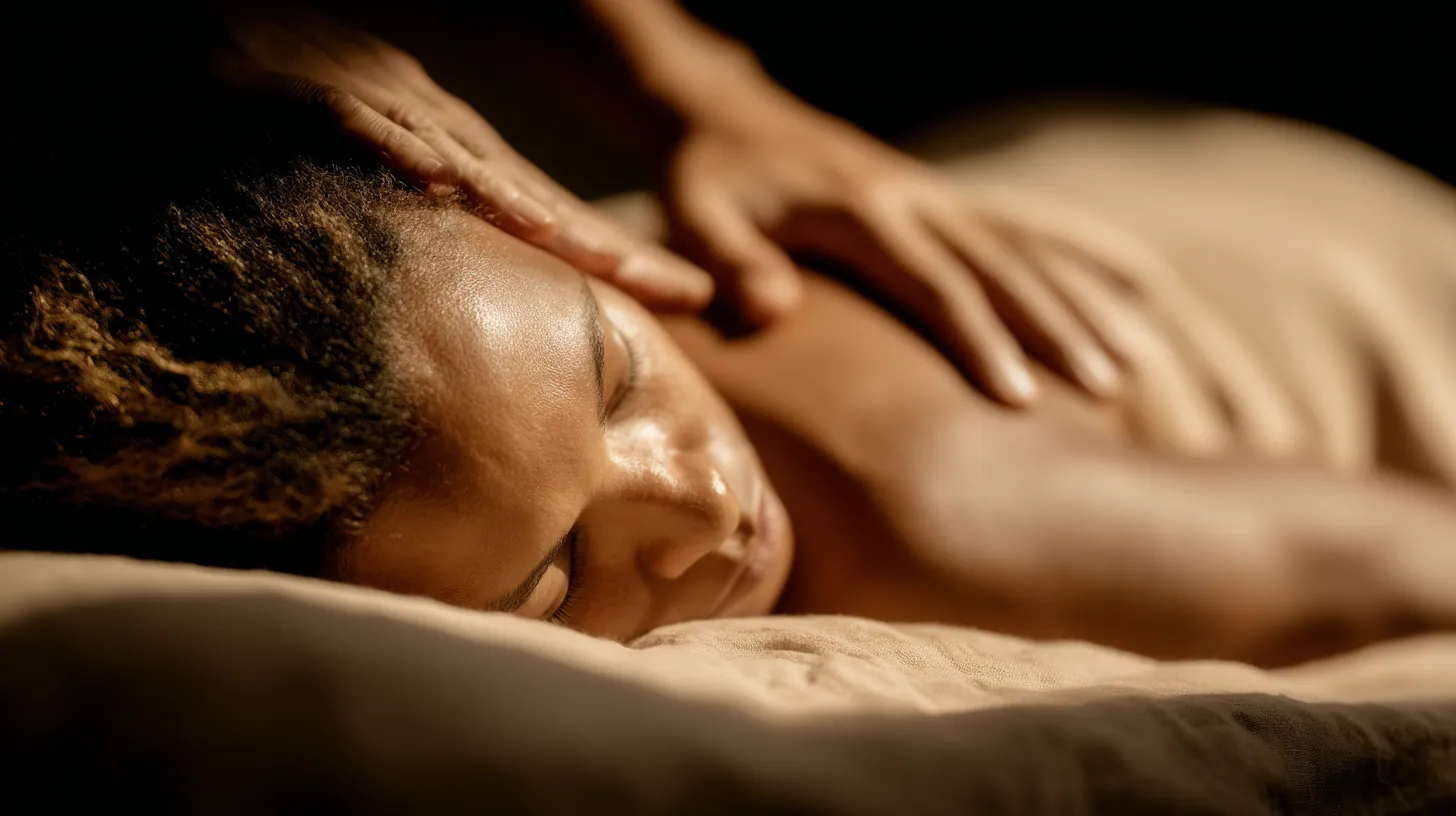
You arrive into a private, warm room. There is time to speak first. When you are ready, you move to the table, covered with soft linen. Your genitals stay covered throughout. The linen moves as the work does, always named before it happens. The touch is slow and responsive, and the pace is set by your body, not a timer. You can read how the work unfolds in full, or about somatic bodywork for women more broadly.
Sessions and how to begin
Sessions are held in English or German.

You can see the three sessions and request a time directly. (Auf Deutsch lesen: zur deutschen Seite.)
Frequently Asked Questions
You undress, and you may keep your underwear on if you wish. Staying fully clothed is not possible, because it prevents the work. Your genitals stay covered for the whole session, always. Whether your breasts stay covered is your choice, and it is settled in the conversation before you undress, never on the table. Soft linen covers you, and it moves only as the bodywork requires, so what is not being worked on stays covered. You can cover up again at any point, and you can stop at any point, without giving a reason.
There is no debrief unless you want one, and nothing about the ending is hurried. Some women get up and feel ordinary. Others are quieter than usual for the rest of the evening. A few cry, either during the bodywork or on the way home, with no story attached to it, and that happens often enough to be worth saying in advance. None of those responses is the correct one.
### Is bodywork with a male practitioner safe for women?
Yes, when the frame is built for it. At Sacred Touch the practice is held by a male practitioner for women only, on explicit consent, with stop-safety at any moment. Many women find that being met by a steady, boundaried masculine presence that asks for nothing is precisely the safe reference point their body was looking for.
You can speak at any moment. You can ask to pause, to slow down, to have the work move elsewhere, or to stop entirely. You can withdraw from contact in any area without explanation. Your no is received as information, not resistance, and it never has to be justified.
No. Sacred Touch is somatic bodywork for women and is not a sexual service in any form. The work is held in service of the nervous system settling. A session includes no contact with your breasts and no contact with your genitals. The scope of a session is settled before you arrive and does not change during the session.
Yes. Sessions are held in English or German, including the conversation beforehand and the consent throughout. The studio is in Vienna's 13th district.