
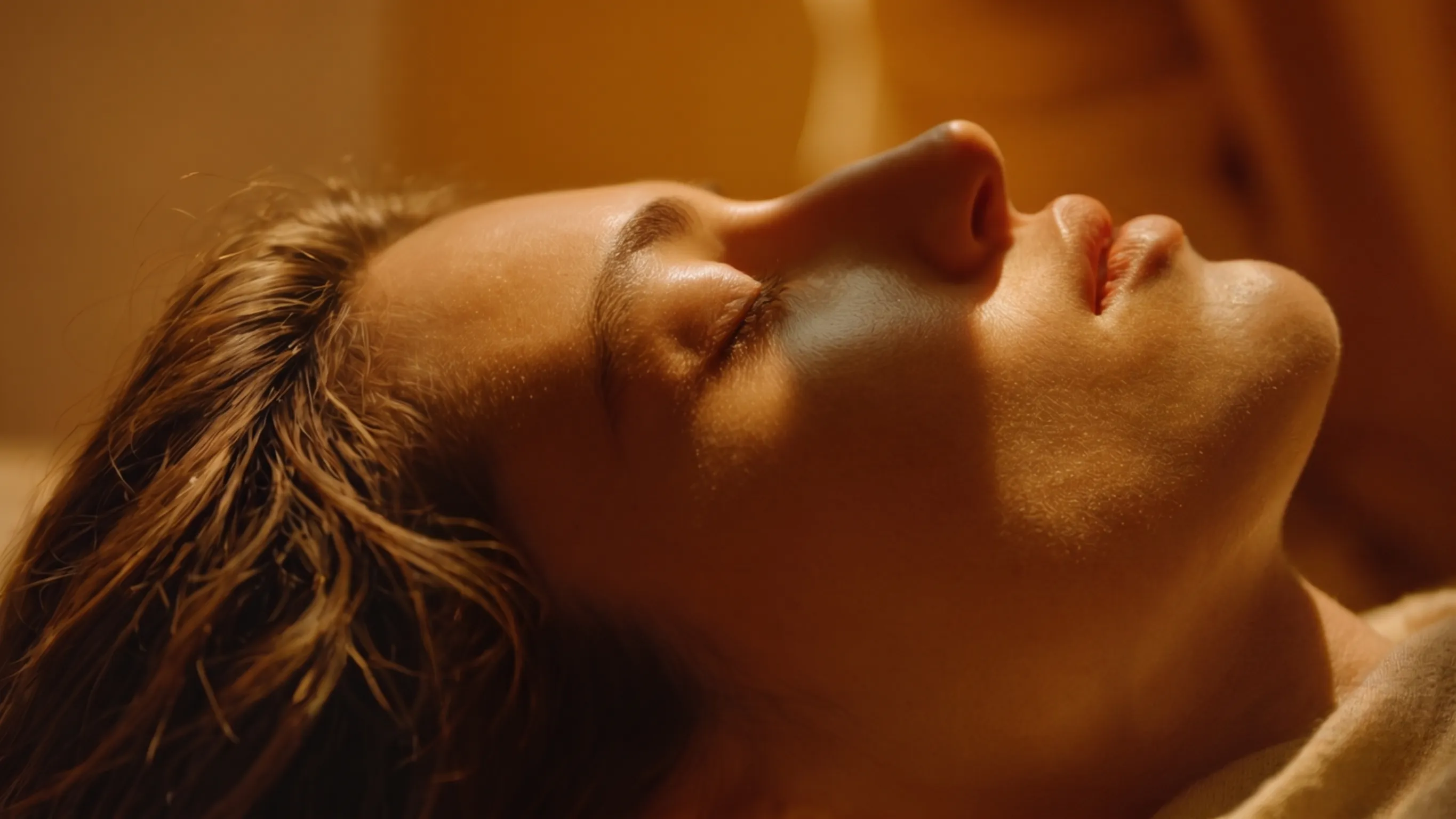
The body that stays ready
You know the state from the inside. The body that will not quite come to rest even when nothing is actually wrong. Sleep that leaves you almost as tired as before. A low hum of readiness that never fully switches off, so the shoulders sit high and the breath stays shallow without your permission.
This is not a fault in you. It is what a capable nervous system does once it has decided, somewhere back along the way, that staying alert is safer than letting go. It will not change its mind because a room is calm and the intention is kind. It changes when it collects enough evidence that alertness is no longer needed.

Settling is a response to safety, not effort
A body does not relax because you tell it to. It relaxes when it gathers enough proof that it is safe to.
Steady presence, a clear and unhurried pace, touch that never rushes ahead: the nervous system reads these directly, not as an idea but as something happening in the body. When it reads enough of them, what has been held under constant low effort can begin to come down. There is a reason the studio sits where it does, on the quiet Buda side where the hills and the river tend to lower the volume of a day. None of this is a promise of outcome. It is the direction the work moves in.
Inside a session
Before any touch there is a conversation, over tea, without hurry. When you are ready, you move to the table, covered with soft linen. Your genitals stay covered throughout. The linen moves as the work does, always named before it happens. The touch stays slow and follows your body rather than a timer.
The work draws on Polynesian bodywork and the Eastern somatic and esoteric lineages behind it. Nothing here is pushed. Slow, sustained contact is registered differently from brisk contact, and that difference is most of the method. You can read how the work unfolds in full.
Sacred Touch is not a replacement for psychotherapy or medical care. If your system is not yet steady and you are working through recent trauma without support, this is not the right first step.
Who tends to come
Some women arrive after a long season of holding everything together, depleted in a way that ordinary rest does not reach. Some understand themselves well and still feel their own body from a distance, looking toward feeling your body from the inside again. If safety is the first thing you need to be sure of, begin with a safe, consent-led space.
Sessions and how to begin
Sessions run in English. Hungarian is not required.

You can see the three sessions and request a time directly.
Frequently Asked Questions
You undress, and you may keep your underwear on if you wish. Staying fully clothed is not possible, because it prevents the work. Your genitals stay covered for the whole session, always. Whether your breasts stay covered is your choice, and it is settled in the conversation before you undress, never on the table. Soft linen covers you, and it moves only as the bodywork requires, so what is not being worked on stays covered. You can cover up again at any point, and you can stop at any point, without giving a reason.
Somatic bodywork can support nervous-system regulation by giving the body the conditions it needs to move from alertness toward settling: a safe, consent-led space, steady presence, and slow touch it reads as non-threatening. It describes a direction rather than an outcome, and results are not promised. It is not a treatment or a cure.
No. Sacred Touch is somatic bodywork, not psychotherapy or medical care, and it replaces neither. Thomas is a somatic practitioner, not a therapist or doctor. If you are in an acute mental health crisis or working through recent trauma without therapeutic support, this is not the right first step.
No. It is not a sexual service in any form. You are covered with soft linen. Your genitals stay covered throughout. The linen moves as the work does, always named before it happens. The work stays in service of the nervous system settling. A session includes no contact with your breasts and no contact with your genitals. The scope of a session is settled before you arrive and does not change during the session.
Three sessions are available